I was so excited to read the chapter for today. I love discussions surrounding fairytales, and how they have been used to push a certain narrative onto people. It was actually the seminar class I took here at RIC, which was based on analysis of fairytales, that solidified my decision to change from Math Ed. to English! Also, I always love reading work by Linda Christensen, so I was elated to find out she has a piece that covers one of my absolute favorite topics!
Since some of this was familiar to work I've done before, I felt as though what I was reading was definitely validating my views. Fairytales, cartoons, and Disney have used their platforms to create certain norms that are then used as a form of control. For instance, the constant theme of if you are nice, good at housework, and compliant, you will be happily married to your prince charming. But, if you dare to be anything different (or old, or not the 'ideal' size), you'll end up the villain of the story. With these tales, as quoted in Christensen's reading "we are taught more than anything else, how not to rebel" (Dorfman).
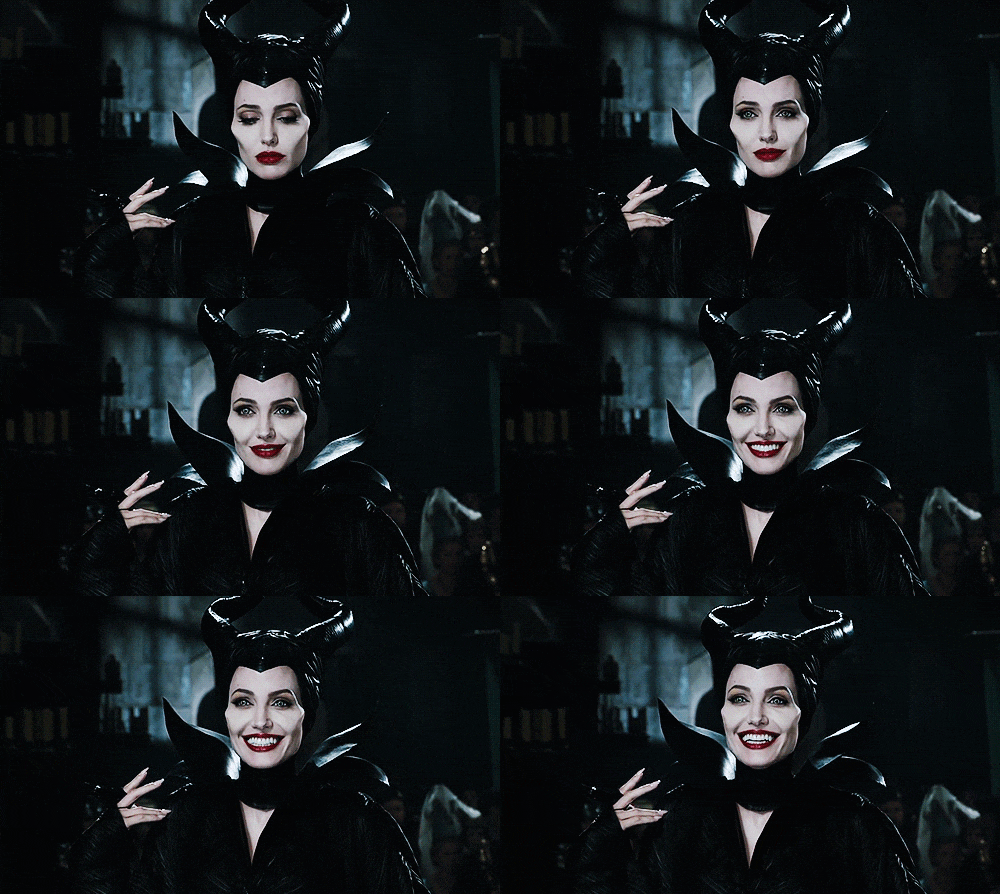
I felt that Maleficent did a great job working to change the narrative (although admittedly I have not seen it in several years and my opinion could be different now). I don't feel like other live action remakes lived up to the same potential though, as Cinderella and Beauty and the Beast didn't feel like they were drastically altered. Another good example of a live action being adapted in a way that provides more representation than just another white girl is The Little Mermaid, which received major backlash from


During my undergraduate career, I created a unit that critically analyzed fairytales, and I also got the chance to teach it during student teaching, and then again during my first year teaching. The end goal of my unit was for students to create an adaptation of a fairytale that was more inclusive than the popular version of the fairytale, which you can check out here and even use if you would like to! A part of me is hoping that I will have the chance to teach this unit again, especially now that I have even more knowledge on the topic from Christensen's piece and the slide deck!


Hi Heather. I enjoyed reading your blog and totally agree with what you said the Disney norms that have been used as a form of control.
ReplyDeleteHi Heather! I really enjoyed your post and your comments on Maleficent. It would be really interesting to see other classic Disney narratives told from alternative perspectives.
ReplyDeleteHi Heather! The quote you chose from the reading that says, "we are taught more than anything else, how not to rebel" really resonates with me as a history teacher. This is part of the way rulers maintain control. If there is a sign of rebellion they try to squash it and instill fear so that it doesn't spread. Hmmmm how does this connect to what Disney does? Interesting side to consider.
ReplyDelete